metastatic-breast-cancer
151 Topics
💛 Help Shape a New Text Message Support Program for People Living with Metastatic Breast Cancer
We know that living with metastatic breast cancer brings unique challenges, and having access to the right support at the right time can make a real difference. Researchers from The University of Sydney, in partnership with Breast Cancer Network Australia, are seeking feedback from people living with metastatic breast cancer to help adapt the EMPOWER-SMS text message support program so it better meets the needs of this community. The EMPOWER-SMS program was originally developed for people recovering from early breast cancer and was found to be helpful, motivating and supportive. This project aims to ensure the program is relevant and meaningful for people living with metastatic breast cancer. What is involved? 💛 Complete a short online survey reviewing sample text messages 💛 Share your feedback on the content and support provided 💛 Survey completion time is approximately 15-20 minutes Your feedback will directly contribute to the co-design of a support program for people living with metastatic breast cancer. Before you decide 📄 Please take a moment to review the attached Participant Information Sheet, which provides further details about the study, what participation involves, and how your information will be managed. Interested in participating? 🔗 Complete the survey here: https://redcap.sydney.edu.au/surveys/?s=KTCAYNM83FTPY37L Ethics approval ✅ This study has received ethics approval from the The University of Sydney (Reference: HE000885). 💛 Thank you for helping ensure the voices and experiences of people living with metastatic breast cancer remain at the centre of research and support programs.
Q&A with Annabel Crabb – Metastatic Breast Cancer event, Sept 16, 2026
METASTATIC BREAST CANCER Join Annabel Crabb on Q&A on Wednesday 16 September from 5-6:30pm (AEST) / 7-8:30pm (NZST) for the next Q&A event, providing a compassionate and informative space to explore the questions many people living with metastatic breast cancer—and those who love and care for them—are asking. The latest in research and clinical trials – Treatment for metastatic breast cancer continues to evolve rapidly. Our experts will discuss the latest advances in research, emerging therapies, personalised medicine and clinical trials, including how research is improving outcomes and creating new treatment options for people living with metastatic disease. Treatment and making informed decisions – What are the goals of treatment? How long might treatments work, and what happens if they stop working? We’ll explore how treatment decisions are made, how tests can help guide treatment choices, the role of clinical trials, managing side effects and navigating questions around accessing therapies that may not be PBS funded. Living well with metastatic breast cancer – Many people continue to work, travel, exercise, spend time with family and pursue meaningful goals while living with metastatic breast cancer. Our panel will discuss maintaining quality of life, setting realistic expectations, staying active where possible and adapting as needs change over time. We’ll also introduce support programs, including Finding My Way Advanced, designed specifically for people living with advanced breast cancer. Supporting families and loved ones – Metastatic breast cancer affects not only the person diagnosed but also their family, carers and friends. Through both expert guidance and lived experience, we’ll explore the emotional impact of an incurable illness, practical ways to support one another and resources available for families throughout the journey. You can register here: https://www.breastcancertrials.org.au/qa-events/qa-metastatic-breast-cancer/Dupuytren Contracture
Moderator moved @jaynie_000 comment to dedicated discussion post: This is my first post on this platform. I see my oncologist tomorrow, but I have developed a painful and growing nodule on my ring finger / knuckle on the underside of my palm. It’s getting larger and more painful. I am on femara since 2020 when I got diagnosed with stage 4 metastatic breast cancer at age 53. My first / initial diagnosis with early breast cancer was in 2009 and I was 42. I took Arimidex for 9 months but couldn’t cope with the pain in my feet. I changed to Aromasin and it ultimately dissolved my Achilles tendon. I required it to be grafted after it broke. I was on Aromasin for 6 years and gave up on AI’s due to their effect on my tendons and continued pain in my joints and feet. Fast forwards to now and I have had plantar fasciitis (pain in arch of foot) and now I’ve discovered the nodule on my palm. I can’t hold the steering wheel of my car well or open a jar with a tight lid. Any action that requires grip hurts. My oncologist has previously said that Femara can cause tendinitis so I’m ready for her to say give femara a rest for a while. But she has also told me that aromatase inhibitors essentially are the only drug that holds the cancer at bay. Because my cancer is hormone receptive. Ultimately my cancer will recognise an AI and work a way to get around it. When that happens it’s a whole new approach to treatment. So I’m not keen to go off Femara for any period of time. I will put up with side effects. I live in Sydney close to the CBD. I have most of my treatment and appointments through the Mater hospital at north Sydney. I have huge trust for my onc. a professor and specialist when it come to MBC. I am keen to know how you have found the radiation treatment. Did it work? I know an excellent hand surgeon but if I can avoid surgery then I will pursue that option. And my biggest question is …Femara the cause of your Dupuytrens📣 Survey Invitation: Tucatinib (Tukysa) and Metastatic Breast Cancer
Dear members, We'd like to invite you to take part in a short survey about tucatinib (Tukysa) for people with human epidermal growth factor receptor 2 positive (HER2+) metastatic breast cancer. This survey is for people who have either taken tucatinib (Tukysa), or tried to access it. Your feedback will help us understand the day-to-day impact of accessing (or not accessing) this treatment, including physical health, emotional wellbeing, financial pressures, and overall quality of life. The insights you share will be used to support a consumer submission to the Pharmaceutical Benefits Advisory Committee (PBAC), the body that decides which medicines are made more affordable through the Pharmaceutical Benefits Scheme (PBS). Take the survey here: https://www.surveymonkey.com/r/LJXB3KT The survey is open until 12 September. The survey is anonymous, voluntary, and takes about 10 minutes to complete. You can skip any question you don’t feel comfortable answering. Thank you for lending your voice to this important advocacy. If you have any questions or concerns about this survey, please contact [email protected]
I just found out today
I had my first appointment with my oncologist this afternoon. I had had a PET scan and MRI earlier in the week. I received the results today that the cancer has metastasised. They found a spot on my sternum, back and pelvis. I need to go have a biopsy on my sternum. I was diagnosed with breast cancer on 8 February. 4 days after my father’s funeral. I just feel shocked and numb. I want to feel hopeful but at the moment I just feel hopeless. What do I do to change my mindset? Has anyone else been through similar? I really need to feel like this isn’t a death sentence. I have 2 kids, 15 & 13. I want to be here to see them grow up! Do I even have a chance???
New member
Hi. I was diagnosed with mbc in 2021. An MRI done of my hip (me thinking I needed a hip replacement) revealed a bone lesion and further scans showed I had lesions in my skull, breast bone and right shoulder blade. Radiation helped with the pain in my hip and I am now able to walk unaided. I have been on letrozole and Verzenio (abemaciclib) since mid 2021 and so far results have been positive. Lesions have either shrunk or stabilised and there is no sign of cancer in organs. I know that one day treatment may cease to work but in the meantime I remain positive and enjoy every single day. I love to travel, cook and spend time with family and friends. I’m forever grateful for Bcna, my medical team and all the research that goes in to treatments for this disease. I know others are not as lucky as me and I wish everyone well on their individual journeys.
Little known sign of metastases
I was diagnosed with metastases in 2020, and I recently experienced a strange symptom, which I thought I'd mention here, as it's something that could be a red flag for anyone who is being monitored for recurrence of cancer. I recently started experiencing numbness down one side of my face, chin, lips and tongue. I'm told that this may be due to a trapped nerve, or nerve damage caused by cancer in my scalp or base of the skull. Apparently, sometimes it is the first sign of breast cancer, or of breast cancer that has metastasized, but I had never heard of it before. Anyone who is interested can Google "numb chin syndrome." I'm off to get an MRI of my head this afternoon, to discover exactly what is going on.'Getting on with life' tips
Moderator moved @Batjam to the main discussion section of forum: Batjam Hi all - I’m new to this group. I’m 52 diagnosed St4 Breast Cancer after ending up with a fracture in my hip in Dec 2022. I’ve joint to connect with others - get any ‘getting on with life’ tips etc. Say hi if you are in a similar situation and feel like chattingBCNA Leads First National Roadmap to Collecting Metastatic Breast Cancer Data
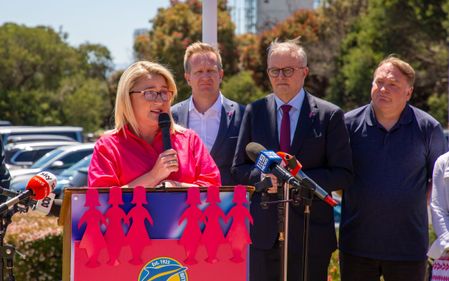
A roadmap to finally count the number of people diagnosed with incurable and life limiting metastatic breast cancer (MBC) is a step closer thanks to the $1.5 million announced over the weekend by Prime Minister Anthony Albanese to fund a cancer data alliance. Almost two years ago a group of Breast Cancer Network Australia (BCNA) consumer representatives living with metastatic breast cancer told us they feel invisible. They wanted to be made visible by being counted properly on all our cancer registries across Australia. Currently this data is not consistently collected across all states and territories. Last November BCNA launched the roadmap to address the lack of national cancer data for those living with MBC at Parliament House, Canberra. The roadmap was the result of a roundtable that saw experts from across the sector work towards recommendations to improve Australia’s cancer data, which aligns with one of the priorities of the first Australian Cancer Plan, launched last year. BCNA Director Policy Advocacy & Support Services, Vicki Durston acknowledged everyone who had come together to make this roadmap a reality, including the late Peta Murphy MP who stood with BCNA for many years to have people with MBC made visible through national data collection. “She would have been so incredibly proud that we are now closer to ensuring that the many thousands of invisible Australians with metastatic breast cancer will no longer be hidden in plain sight,” Ms Durston said. “We know that cancer sectors in other countries around the world are watching Australia, this is our chance to build on progress being made and to become a world leader in health data.” This $1.5 million funding to the Australian Institute of Health and Welfare will ensure the formation of an Australian Cancer Data Alliance, which will see state and territory cancer registries supported to work towards routinely collecting cancer stage and recurrence data. “This Federal Government funding will help the sector pioneer the collection of this important data to inform and drive policy, innovation, planning, treatment and care,” Ms Durston said. “How can we possibly support this population living with metastatic disease and meet their needs when we don’t know how many people in Australia are living with metastatic breast cancer? “Today we can begin consolidating a way forward for better quality data not just for breast cancer, but for all metastatic cancers.” BCNA has been calling for improvements to Australia’s cancer data since 1998 and will today mark this key milestone alongside all those with a lived experience of cancer and their advocates. Read BCNA’s report Time to Count People with Metastatic Breast Cancer – A Way Forward