
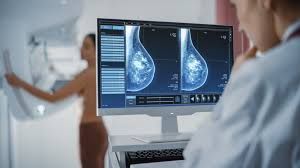
There’s been a bit of buzz lately about artificial intelligence (AI) and how it might play a role in breast cancer screening and risk prediction. For many of us, AI can feel a bit mysterious or even intimidating - so let’s explore it!
👀AI Might Help Spot Breast Cancer
Breastcancer.org explains that AI programs are being trained to look at mammograms (sometimes millions of them) to learn what typical breast tissue looks like and what might be a sign of cancer. The idea is that AI may pick up tiny changes or patterns that are easy for the human eye to miss. Researchers hope this could help radiologists detect cancer earlier or decide which images need to be reviewed first.
AI is also being tested on other scans like ultrasounds and MRIs. It’s already being used in some parts of Europe, though it’s not standard everywhere yet. At this stage, it’s not about replacing radiologists but supporting the - almost like having an extra pair of very detail‑focused eye. Read more here
🧬Using AI to Understand Personal Risk
Another interesting development is happening here in Australia. The VCCC Alliance is sharing early work from the BRAIx project, which uses AI to help predict a person’s risk of developing breast cancer. The system looks at mammogram images from more than 95,000 women and uses advanced computer models to estimate who might be at higher risk in the future.
The hope is that AI could help create more personalised screening, meaning people who need extra monitoring might be identified earlier, while others might avoid unnecessary tests. The project is also exploring how AI might help reduce false alarms and missed cancers, two challenges in current screening processes. Read more here
✨Why This Is Interesting (and Why We’re Still Watching Closely)
All of this raises some very natural questions:
- Could AI one day help detect cancers earlier?
- Might it offer more tailored screening for individuals?
- How do we make sure it’s safe, fair, and reliable?
Researchers are excited about the possibilities, but they also emphasise caution. AI needs ongoing testing and real‑world evaluation before it becomes part of everyday care.
For now, it’s simply an area worth watching with curiosity. It may one day become another useful tool in breast cancer screening and risk prediction but like all medical advances, it will take time, evidence, and thoughtful conversation.
💬Let us know your thoughts on this in the comments!
Published 8 months ago
Version 1.0
Christina_BCNA
Community Manager
Joined August 05, 2025
News and events
Follow this blog board to get notified when there's new activity