screening
5 Topics
Policy & Advocacy Update - Vicki Durston - Feb26
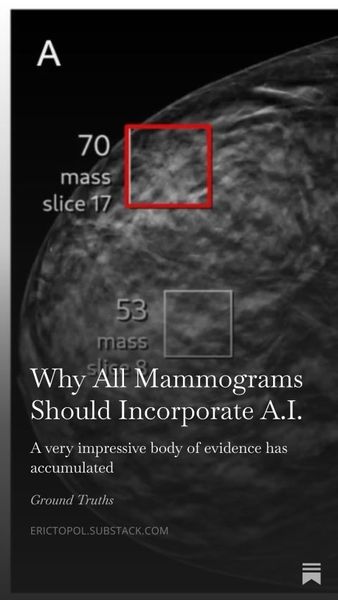
As we continue to move through 2026, there’s a real sense of progress building across breast cancer outcomes - both here at home and internationally. I want to share two important moments that highlight how evidence, leadership, and advocacy are shaping a better future for those affected by breast cancer. ✨ Why AI in mammography can’t wait Eric Topol’s recent article, “Why All Mammograms Should Incorporate AI,” brings together powerful evidence showing that AI in breast screening is no longer a future idea - it’s part of modern, effective care today. One of the strongest examples is the large MASAI trial from Sweden, involving more than 105,000 women. When radiologists used AI as support, the outcomes were remarkable: 👉 29% more cancers detected 👉 24% more invasive cancers found 👉 No increase in false positives or recalls 👉 44% reduction in radiologist workload Two-year follow-up findings were equally compelling: fewer interval cancers, fewer invasive cancers, and fewer aggressive types such as triple negative and HER2-positive cancers. What international evidence now shows International evidence is telling a very consistent story. Large trials and real-world evaluations show that AI-supported mammography can safely increase cancer detection while reducing radiologist workload, without increasing false positives or unnecessary recalls. This matters in a system already under pressure. AI is also changing how we think about risk. New image-based risk models can analyse a mammogram that appears “normal” to the human eye and still identify women at higher risk of developing breast cancer in the next few years. This opens the door to more personalised, risk-stratified screening, rather than the one-size-fits-all model we rely on today. Here in Australia, BreastScreen is a highly respected program, but it was designed more than 30 years ago. While Victoria and NSW are now piloting AI within their services, we still lack a coordinated national approach for integrating AI into breast screening that reflects today’s evidence. What BCNA is calling for We are now at a decision point. The question Eric Topol poses - “If not now, then when?”- is the same challenge facing Australia. For BCNA, this is not about chasing technology for its own sake. We are calling for AI to be treated as a core part of the evolution of breast screening, not an optional add-on. That means: Embedding AI research, evaluation and implementation within BreastScreen Ongoing, in-program national investment in screening research and quality improvement Ensuring that the benefits of new technology are delivered equitably, so no woman is left behind because of where she lives or her background If we get this right, AI won’t replace the program Australians trust - it will strengthen it, helping detect cancers earlier, supporting an overstretched workforce, and moving us closer to truly personalised, risk-stratified screening.77Views6likes0Comments🔬 Current Research Exploring the Role of AI in Breast Cancer
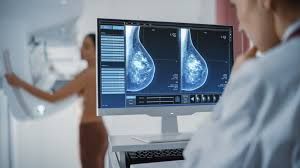
There’s been a bit of buzz lately about artificial intelligence (AI) and how it might play a role in breast cancer screening and risk prediction. For many of us, AI can feel a bit mysterious or even intimidating - so let’s explore it! 👀AI Might Help Spot Breast Cancer Breastcancer.org explains that AI programs are being trained to look at mammograms (sometimes millions of them) to learn what typical breast tissue looks like and what might be a sign of cancer. The idea is that AI may pick up tiny changes or patterns that are easy for the human eye to miss. Researchers hope this could help radiologists detect cancer earlier or decide which images need to be reviewed first. AI is also being tested on other scans like ultrasounds and MRIs. It’s already being used in some parts of Europe, though it’s not standard everywhere yet. At this stage, it’s not about replacing radiologists but supporting the - almost like having an extra pair of very detail‑focused eye. Read more here 🧬Using AI to Understand Personal Risk Another interesting development is happening here in Australia. The VCCC Alliance is sharing early work from the BRAIx project, which uses AI to help predict a person’s risk of developing breast cancer. The system looks at mammogram images from more than 95,000 women and uses advanced computer models to estimate who might be at higher risk in the future. The hope is that AI could help create more personalised screening, meaning people who need extra monitoring might be identified earlier, while others might avoid unnecessary tests. The project is also exploring how AI might help reduce false alarms and missed cancers, two challenges in current screening processes. Read more here ✨Why This Is Interesting (and Why We’re Still Watching Closely) All of this raises some very natural questions: Could AI one day help detect cancers earlier? Might it offer more tailored screening for individuals? How do we make sure it’s safe, fair, and reliable? Researchers are excited about the possibilities, but they also emphasise caution. AI needs ongoing testing and real‑world evaluation before it becomes part of everyday care. For now, it’s simply an area worth watching with curiosity. It may one day become another useful tool in breast cancer screening and risk prediction but like all medical advances, it will take time, evidence, and thoughtful conversation. 💬Let us know your thoughts on this in the comments!63Views2likes0CommentsAustralian women denied knowledge of their increased breast cancer risk
Approximately 10% of women have high breast density. At this point in time, thousands of Australian women are being denied important information about their breast health which could empower them to better understand and manage their risk of breast cancer. BCNA’s Director of Policy, Advocacy and Support Services, Vicki Durston, says Australia’s approach to population-based screening is not keeping pace with growing evidence that supports routine reporting of breast density. This due to the absence of national reporting standards and a lack of software in publicly funded screening services that can effectively measure breast density. “Every woman has the right to know and understand her breast cancer risk through standardised breast density reporting,” she says. “For those identified as high-risk or with high breast density, it is essential that clear options and pathways are available to support early detection and proactive risk management.” Breast Cancer Network Australia (BCNA) is currently advocating for a unified national approach to reporting breast density through Australia's national population-based breast screening program – BreastScreen. Mammography images showing the difference between spotting cancer in a fatty breast (top) vs dense breast (bottom). It's like "spotting a snowman in a snow storm". You can read BCNA's media release via the link Australian women denied knowledge of their increased breast cancer risk Read ABC's feature piece on our advocacy efforts: Mandatory breast density reporting495Views5likes19CommentsBCNA Policy Priorities 2025
Every day, 58 Australians are diagnosed with breast cancer. Too many face high financial costs, and ongoing emotional and health challenges. That’s why BCNA is calling on the Government to make treatment more affordable, improve early detection, provide better support, and invest in vital cancer data. 🔗Read our policy priorities via the link BCNA Policy Priorities 202569Views2likes0CommentsLaunch of the Australian Cancer Plan
Hello Online Network members, We heard from our BCNA staff members attending the Clinical Oncology Society of Australia (COSA) Annual Scientific Meeting, that the 'Australian Cancer Plan' has been launched today. To learn more about the new Australian Cancer Plan, which aims to improve prevention, screening, treatment and management of all cancers for all people across Australia see Australian Cancer Plan website.125Views0likes0Comments