news
104 Topics
Policy & Advocacy Update - Vicki Durston - Sep26
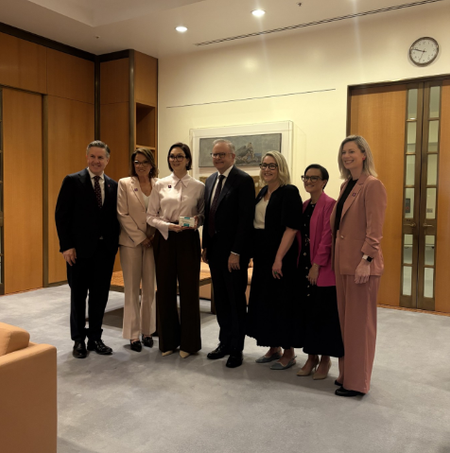
For many women affected by breast cancer, the past few months have been filled with uncertainty, frustration and, in some cases, fear. When the decision was announced to removemonthly Zoladex (goserelin 3.6mg) from the Pharmaceutical Benefits Scheme (PBS) and Australia, thousands of women who rely on ovarian suppression as part of their treatment were left wondering what would happen next. With no confirmed monthly alternative available on the PBS at the time, many women were understandably concerned about whether they would continue to have access to the treatment they depend on. Today, we can share some welcome news. The Australian Government has announced that monthly triptorelin will be listed on the PBS from 1 October 2026, providing an evidence-based, funded treatment option for people who require ovarian suppression as part of their care. Triptorelin is a well-established treatment that has been used safely for many years and has been studied extensively. Its PBS listing means women will have access to a funded monthly option with evidence supporting its use as an ovarian suppression treatment for women with breast cancer. This is an important outcome for our community and one that BCNA has been advocating strongly for alongside consumers, clinicians and other stakeholders. For many women with hormone receptor-positive breast cancer, ovarian suppression is not optional. It is a critical part of treatment. Put simply, some breast cancers are fuelled by oestrogen. Ovarian suppression helps switch off a major source of that fuel, reducing the risk of cancer returning and helping to control metastatic breast cancer. For some younger women, it can also help protect ovarian function and preserve the possibility of having children in the future. This is not simply about managing symptoms. It is about treating cancer, protecting lives and preserving future choices. 💗 🌸 The Impact of Uncertainty Since the announcement of the withdrawal of monthly Zoladex, BCNA has heard from women across Australia who were deeply concerned about what this might mean for their treatment and future. Many shared fears about treatment disruptions. Others were left trying to understand what alternatives might be available. Some questioned whether they would need to make significant decisions about their bodies because they could not be certain that ongoing treatment would remain accessible. These stories highlighted just how important it was to ensure a funded monthly alternative would be available before the withdrawal of monthly Zoladex took effect. No woman should be left worrying about whether an essential cancer treatment will still be there when she needs it. 🤝 BCNA's Advocacy Efforts Throughout this process, BCNA's role was to listen, advocate and work towards a solution. We heard directly from women affected by breast cancer and brought those experiences together with clinical expertise and evidence. We engaged closely with government, the Department of Health, clinicians and industry representatives to ensure the voices of those affected remained at the centre of discussions. Our message was clear: Women needed a funded monthly alternative available through the PBS before monthly Zoladex was withdrawn. Today’s announcement means that goal has been achieved. 💞 A Collective Effort This outcome would not have been possible without the efforts of many people and organisations. BCNA acknowledges Minister Mark Butler, the Department of Health, the Pharmaceutical Benefits Advisory Committee and the clinicians who responded quickly to this issue and recognised the impact it was having on women affected by breast cancer. We also acknowledge Ipsen, which stepped forward with tTriptorelin, an established treatment that has been used internationally for many years, and worked through the necessary processes to make it available to Australian women. Most importantly, we want to thank the women who courageously shared their stories. Your voices mattered. Your experiences informed the conversation. And your advocacy helped drive this outcome. ❓What Happens Next? While today's announcement provides welcome certainty, we know that many people will still have questions. BCNA will continue to support our community by sharing information, answering questions and helping people understand what this change means for them. We encourage anyone with concerns about their treatment to speak with their healthcare team about the options available to them. Every person's situation is unique, and treatment decisions should always be made in partnership with your medical team. 💗 Looking Forward At the heart of this announcement is something women have been asking for throughout this process: certainty, continuity of treatment, affordability and choice. Cancer already brings enough uncertainty. Access to essential treatment should not be another burden for women and their families to carry. This is a positive step forward and a powerful reminder of what can be achieved when consumers, clinicians, advocates and government work together to put patients first. To every woman who shared her story, asked questions, advocated for change, or supported others through this period of uncertainty, thank you. Today, women have greater certainty about their treatment options and that is something worth celebrating. 🌸💕33Views2likes0CommentsHow far we've come 🩷
Over the past 25 years, we've been working to change what it means to experience breast cancer in Australia. Because of our network, progress that once felt impossible has become reality. But there are still too many people facing barriers, inequities and uncertainty after a diagnosis. And we're not done yet. We want to find breast cancer earlier. We want to help women navigate through the system. We want to help their family and friends support them. Together, we'll keep working towards a future with no lives limited by breast cancer. 👉 Watch the message from our founder Lyn Swinburne here 👉 Watch the message from our CEO Kirsten Pilatti here41Views4likes0CommentsWe want to hear your Whole Story 🩷
If you've been affected by breast cancer, we'd love you to share the part of your experience you wish more people understood using #TheWholeStory on social media. By sharing more of these experiences, together we can broaden people's understanding of breast cancer, give greater visibility to what too often goes unseen or unspoken, and strengthen our collective voice as we work towards a future with no life limited by breast cancer. 👉 Share your #thewholestory on instagram here In 15-30 seconds, share #TheWholeStory from your perspective on your own social media channels, and don't forget to tag @breastcancernetworkaustralia and #thewholestory so we can help amplify your voice. 🩷34Views1like0Comments📢 Important Update: Triptorelin to be Listed on the PBS from 1 October 2026
There is welcome news for many people affected by breast cancer. Federal Minister for Health and Aged Care Mark Butler has announced that triptorelin (Diphereline®) 3.75mg will be listed on the Pharmaceutical Benefits Scheme (PBS) from 1 October 2026. This announcement comes after significant concern within the breast cancer community following the planned withdrawal of monthly Zoladex (3.6mg) from the PBS on 1 November 2026. For many premenopausal women, ovarian suppression is a crucial part of treatment, helping to reduce oestrogen production that can fuel hormone-sensitive breast cancer. Breast Cancer Network Australia has shared that many women experienced anxiety and uncertainty about future treatment options, with some making life-altering decisions because they feared losing access to a monthly ovarian suppression treatment. The PBS listing of triptorelin means a monthly alternative will continue to be available, providing much-needed reassurance and choice. This outcome follows months of advocacy by consumers, clinicians, and organisations including Breast Cancer Network Australia, highlighting the power of the breast cancer community coming together to raise concerns and advocate for change. If this change may affect your treatment, it's important to speak with your treatment team about what it means for your individual situation. You can read more here: 🔗 https://www.bcna.org.au/latest-news/bcna-news/triptorelin-to-be-listed-on-the-pbs-from-october-2026 💕 We know this news may bring relief to many members who have been worried about ongoing access to ovarian suppression treatment. Please feel free to share your thoughts, questions, or experiences below.26Views2likes0Comments
Exciting news for Breast Cancer Network Australia🎉
Hello to all our members, Today, you may have noticed Breast Cancer Network Australia's website looks a little different. A little bolder. A little brighter. We are ready for what comes next in breast cancer care and support. For more than 25 years, Breast Cancer Network Australia has been shaped by people affected by breast cancer. You’ve shared your experiences, told us what matters and helped us understand where more support and change are needed. That lived experience remains at the heart of who we are, and it has helped shape this next chapter too. Over my twenty years here, you have shared with me and our Network how breast cancer can affect almost every part of life. Treatment and side effects are part of the story, but so are the impacts on emotional health, relationships, work, finances, identity and plans for the future. And for people living with metastatic breast cancer, there is no ‘after treatment’. Our refreshed brand helps us tell more of that story and show up with greater clarity and confidence. We want more people to know who we are, find us when they need us and connect with the trusted information, support and community that you know so well. And while we might look different, what matters most hasn’t changed. We’re still Australia’s largest lived experience breast cancer organisation. Still listening. Still providing trusted information and support. Still bringing your collective voice to the decisions that shape care, access and outcomes. Because the more people we reach, the stronger our network becomes. And the stronger our network becomes, the more we can achieve together as we work towards no life limited by breast cancer. And from tomorrow, you’ll start to see some of our refreshed look appearing here in the Online Network too. The way this community connects, shares and supports one another isn’t changing, but the space around you will start to look a little different. I hope you enjoy seeing our new look come to life and feel proud of the part this community has played in getting us here. Thank you, as always, for being part of Breast Cancer Network Australia and everything we’re building together. As always if you see something that isn't working or you are worried about - we are just a phone call away - please reach out so we can look into it or help you navigate any changes. Cheers, KP82Views5likes0Comments🔔 Update on access to Zoladex treatment
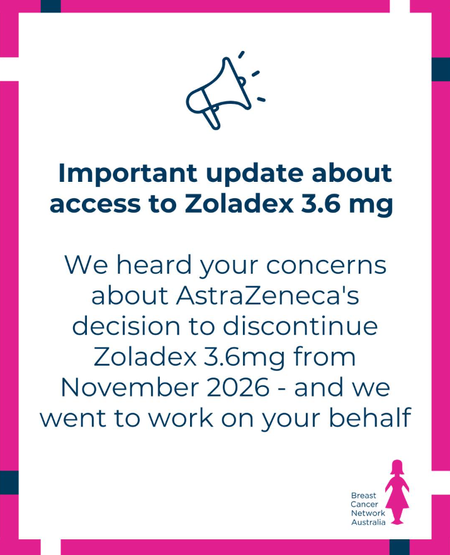
We heard your concerns about AstraZeneca's decision to discontinue Zoladex 3.6mg from 1 November 2026 - and we went to work on your behalf. After coordinating advocacy with clinicians, consumers and key stakeholders, we're pleased to share that options will be available for those affected, including a free access program for eligible patients and work underway on alternative treatment pathways. Supply continues in the meantime and we'll keep you informed every step of the way. Full details available through the link in our bio. If you need support, our Helpline is here for you on 👉 Reach out to the BCNA Helpline 1800 500 258 for information and support Read more here: 🔗 https://www.bcna.org.au/latest-news/bcna-news/update-on-access-to-zoladex-treatment303Views6likes8Comments🏈 Join Us for the 2026 Pink Lady Match! This Weekend - Aug 8
The iconic Pink Lady Match is back for 2026, and we'd love to see our BCNA community there! For more than 22 years, the Melbourne Football Club has proudly partnered with BCNA, helping raise awareness and support for the thousands of people diagnosed with breast cancer each year. Join us this year at the MCG as the Melbourne Demons take on the Fremantle Dockers in support of Australians affected by breast cancer. Whether you're cheering from the stands in the Pink Lady Bay or supporting from home, every show of pink helps make a difference. Tickets for Pink Lady Bay are limited, so be sure to register early. The match will also be broadcast on Fox Footy and Kayo. 📅 When: Saturday, 8 August 2026, 1:15 pm AEST (arrive after 11:30 am) 📍 Where: Melbourne Cricket Ground (MCG), Richmond, VIC 🎟️ Register: https://www.bcna.org.au/event-directory/major-events/pink-lady-match-2026 Who's planning to attend? Let us know in the comments and let's turn the MCG pink together! 💕65Views4likes0CommentsPolicy & Advocacy Update - Vicki Durston - May26
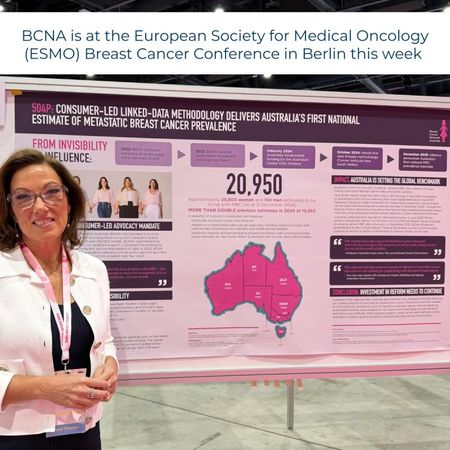
I’m incredibly proud to have represented BCNA at the European Society for Medical Oncology (ESMO) Breast Cancer Congress this year. One of the most significant moments for BCNA at the Congress was presenting Australia’s first national estimate of people living with metastatic breast cancer. For the first time, we now have a clearer understanding that around 20,950 Australians are living with metastatic disease. This is a significant milestone and one that has been a long time coming. For many years, people living with metastatic breast cancer have not been counted and have been under represented in our systems. This has made it incredibly difficult for governments, researchers and healthcare providers to fully understand the scale of need, and to plan services, support and care appropriately. It has also meant that many people in our community have not felt fully seen or recognised. That is why this work matters so deeply. By using linked health data, BCNA has helped shine a light on people with metastatic breast cancer that have too often been invisible in the data. 📊 Sharing our approach at ESMO sparked strong interest from international audiences, with many recognising the importance of not just counting diagnoses, but recognising people living with ongoing disease. It was incredibly encouraging to see Australia acknowledged as a leader in this space. More importantly, it reinforced that our advocacy here at home is helping shape global conversations about how we better understand and support people living with metastatic breast cancer 🌍 But for me, this is about much more than data. It is about people. It is about ensuring that every person living with metastatic breast cancer is acknowledged within our health system, that their experiences are understood, and that their needs are not overlooked. It is about dignity, visibility, and making sure no one feels forgotten 🤝 Being able to carry your stories and your experiences into a global forum was something I did with great pride and responsibility. Moments like this show what is possible when we come together as a community and advocate for change. The discussions at ESMO reinforced how rapidly breast cancer treatment is evolving globally, particularly in precision medicine, biomarkers and targeted therapies. But they also highlighted the growing gap between what science can offer and what patients can actually access through health systems. For Australians living with breast cancer, these conversations matter. International forums like ESMO help shape advocacy here at home- supporting efforts to improve access to new treatments, ensure equitable care regardless of postcode, and better recognise and support the growing number of people living longer with metastatic breast cancer. 👉 You can see a glimpse of my time at the conference here: https://www.instagram.com/bcnapinklady/reel/DYRW8tJiFcf/ 💊Impacts of the 2026–27 Federal Budget While I was proud to represent our community internationally, I have also been reflecting closely on the 2026 to 2027 Federal Budget and what it means for people living with breast cancer here in Australia. There are positive elements, including continued investment in precision oncology and medical research. Advances in targeted therapies, genomics and personalised medicine are changing what is possible for people with breast cancer, and Australia must continue to invest in innovation and research. But innovation only matters if people can actually access it. One of BCNA's key concerns remains timely and affordable access to medicines, particularly the Pharmaceutical Benefits Scheme. Too often, Australians face delays in accessing new and potentially life-extending treatments that are already available in comparable countries. These are not abstract delays. They are real and they impact on people's lives and the precious time they have with their families and loved ones. Without meaningful reform and sustained investment, there is a real risk that Australia will fall behind internationally and that a two-tiered system will continue to emerge - where access to treatment depends on someone’s financial capacity rather than their clinical need. That is not acceptable. Access to the best available care should never be determined by postcode, income or circumstance. This is why BCNA continues to advocate so strongly in this space, including current work to improve access to treatments like tucatinib and Zoladex 💊 We will keep advocating for a system that is fair, responsive, and centred on people. I want you to know that this work is ongoing and that your voices are at the heart of it. Every story, every shared experience, and every conversation helps us strengthen our advocacy and drive change. At home and on the global stage, this is about one thing: making sure you are seen, heard and supported. BCNA will keep showing up, speaking out, and pushing for a system that delivers the care you deserve💪56Views3likes0Comments🎉🏃♀️Celebrating Sarah’s incredible marathon milestone!
We love sharing moments of strength, joy, and achievement from within our community, and today we are celebrating some truly wonderful news from Sarah, one of our Consumer Representatives. This week, Sarah completed the London Marathon, an extraordinary achievement at any time, and even more remarkable while living with metastatic breast cancer. Covering 40 kilometres through some of London’s most iconic sights, Sarah described the day as “big” in every sense. From Big Ben to the Tower Bridge and a powerful finish down The Mall, it was a marathon filled with determination, challenge, and unforgettable moments. Like many long distance runners, Sarah experienced highs and lows along the course. She started strong, slowed to soak up the atmosphere, and faced the infamous wall later in the race. With grit and resolve, she regrouped, kept moving forward, and finished strong, supported by the cheers of the crowd and the encouragement of loved ones along the way. What makes this milestone especially meaningful is the reflection Sarah shared afterwards. For the first time, she embraced that being “awesome” is not about times or performance, but about showing up, persevering, and doing something extraordinary simply by being there. Only a small percentage of people ever complete a marathon. Fewer still complete more than one. And the number of people who have completed 13 marathons while living with metastatic breast cancer is incredibly small. That makes this achievement not just impressive, but deeply inspiring. Sarah also shared how powerful it was to see the stories of others running for loved ones, causes, and personal reasons. A reminder of how sport, movement, and community can connect us and lift us up in unexpected ways. We are so grateful to Sarah for being willing to share her experience with our community. Stories like this remind us that there is no one way to live with metastatic breast cancer, and that moments of strength, pride, and joy still matter. 💪 Congratulations Sarah! Sarah is a member of the Seat At The Table consumer representative group. For more information on this program and how BCNA is ensuring lived experience is at the core of every policy change and research project, visit: https://www.bcna.org.au/our-impact/for-consumers/seat-at-the-table-program Join BCNA's Online Network group for people living with metastatic breast cancer.335Views5likes1Comment💊 Update: Changes to Ribociclib (Kisqali) Storage & Packaging
We wanted to share an important update for anyone currently taking ribociclib (Kisqali), a targeted therapy used for HR-positive, HER2-negative breast cancer (early or advanced), often alongside hormone therapy. 🔄What’s changed? From early May, ribociclib tablets no longer need to be stored in the fridge. They can now be kept at room temperature (below 30°C). 📦During the transition period Some packs will still have the old refrigeration instructions Others will reflect the new room temperature guidance You may notice changes to packaging, including: A longer expiry date (up to 24 months) Different blister pack sizes A new layout showing how many tablets to take each day 💡Why the change? The medication itself has not changed. Updates to manufacturing and packaging now allow the tablets to be stored safely at room temperature. Because of this transition, both “old” (refrigerated) and “new” packs will be in circulation for a while. ✅What do you need to do? Always follow the storage instructions on your specific pack If your pack says to refrigerate, continue to do so until it’s finished Don’t be concerned if packaging looks different, the medicine remains the same Speak to your healthcare team if you have any questions or concerns For more information check out the following resources 👉Early breast cancer 👉Metastatic breast cancer As always, we’re here to support you. If you’ve noticed these changes or want to share your experience, please call our Helpline on 1800 500 258 Monday-Friday 9am-5pm681Views1like0Comments