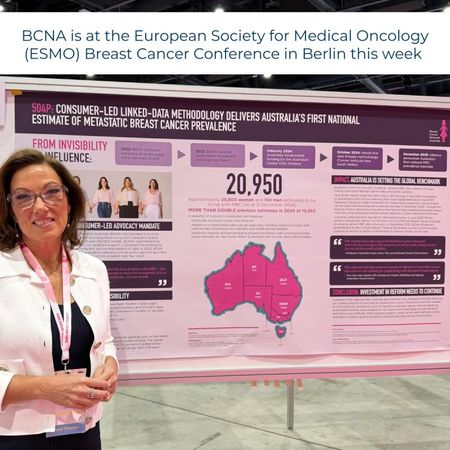
As we continue to move through 2026, there’s a real sense of progress building across breast cancer outcomes - both here at home and internationally. I want to share two important moments that highlight how evidence, leadership, and advocacy are shaping a better future for those affected by breast cancer.
✨ Why AI in mammography can’t wait
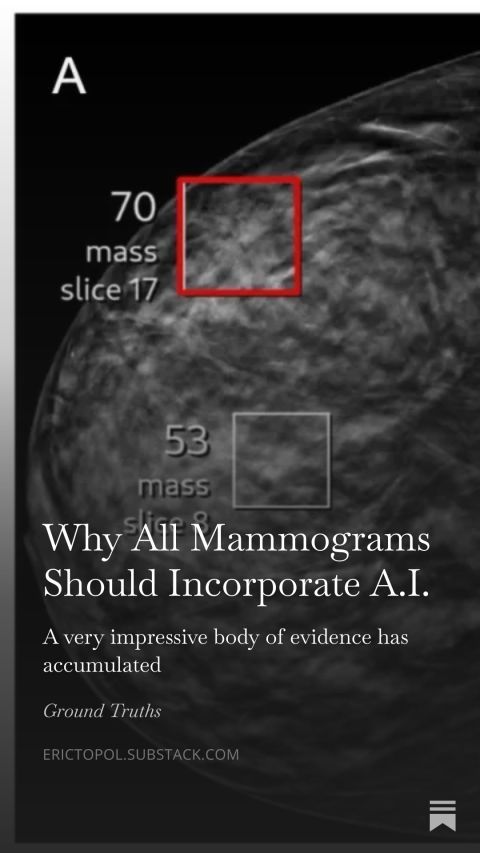
Eric Topol’s recent article, “Why All Mammograms Should Incorporate AI,” brings together powerful evidence showing that AI in breast screening is no longer a future idea - it’s part of modern, effective care today.
One of the strongest examples is the large MASAI trial from Sweden, involving more than 105,000 women. When radiologists used AI as support, the outcomes were remarkable:
👉 29% more cancers detected
👉 24% more invasive cancers found
👉 No increase in false positives or recalls
👉 44% reduction in radiologist workload
Two-year follow-up findings were equally compelling: fewer interval cancers, fewer invasive cancers, and fewer aggressive types such as triple negative and HER2-positive cancers.
What international evidence now shows
International evidence is telling a very consistent story. Large trials and real-world evaluations show that AI-supported mammography can safely increase cancer detection while reducing radiologist workload, without increasing false positives or unnecessary recalls. This matters in a system already under pressure.
AI is also changing how we think about risk. New image-based risk models can analyse a mammogram that appears “normal” to the human eye and still identify women at higher risk of developing breast cancer in the next few years. This opens the door to more personalised, risk-stratified screening, rather than the one-size-fits-all model we rely on today.
Here in Australia, BreastScreen is a highly respected program, but it was designed more than 30 years ago. While Victoria and NSW are now piloting AI within their services, we still lack a coordinated national approach for integrating AI into breast screening that reflects today’s evidence.
What BCNA is calling for
We are now at a decision point. The question Eric Topol poses - “If not now, then when?”- is the same challenge facing Australia.
For BCNA, this is not about chasing technology for its own sake. We are calling for AI to be treated as a core part of the evolution of breast screening, not an optional add-on. That means:
- Embedding AI research, evaluation and implementation within BreastScreen
- Ongoing, in-program national investment in screening research and quality improvement
- Ensuring that the benefits of new technology are delivered equitably, so no woman is left behind because of where she lives or her background
If we get this right, AI won’t replace the program Australians trust - it will strengthen it, helping detect cancers earlier, supporting an overstretched workforce, and moving us closer to truly personalised, risk-stratified screening.
Updated 7 months ago
Version 3.0
Vicki_BCNA
Community Manager
Joined July 08, 2021
News and events
Follow this blog board to get notified when there's new activity