mammogram
147 Topics
Microcalcification biopsy
I was wondering if anyone here has experience with microcalcifications? In particular, whether they've been biopsied and if so, how many times? And have you had an MRI or other imaging to help understand the microcalcifications? I'm curious because I had microcalcifications show up in my other breast from my first mammogram a year ago. Two core biopsies were taken but a clip/marker wasn't inserted. The diagnosis was: benign proliferative changes. I've now had my second mammogram and they want to do another biopsy and insert a clip. They haven't said if anything has actually changed in that part of my breast in the past year. My surgeon is going to ask the imaging place for more information so I understand what's going on. I'm surprised that they want another biopsy so soon and seemingly without any change. I don't know if that's normal and whether that will be the case for the years to come?! 193ViewsSign in to react to this post
 7Comments
follow-up mammogram and ultrasound
Hi all, I hope you are all keeping warm. After my xingle mastectomy last year, I had my first yearly mammogram and ultrasound review last week, and got the results from the oncology team. All clear, which is a relief. I thought I wasn't worried, but on the weekend I was tired, and spent. Maybe in the subconcious level, I was a bit anxious. I'm 42, so I will have quite a few yearly reviews from now on. I was very happy, and shared it with my boyfriend. but not sure who else I should share the good news with (extended family? friends? close work-colleagues?). I mean, its not a milestone, but its nice to know that my body is healthy. i'm just curious...Does anyone do anything special after a review appoinment? Cheers, Paulina115ViewsSign in to react to this post3Comments
New NON-COMPRESSION Breast Screening available - cone-beam breast computer tomography (CBBCT)
I am amazed that this new Breast Screening option hasn't been mentioned here before - I've only just found out about it today! .... Back in the 1980s when I had my 'first' breast cancer scare, I had a 'water scan' where I had to lie face down with my breast suspended thru a hole into liquid ..... it felt really weird! I was never offered it again. (CBBCT isn't currently covered by Medicare yet - so there may be a charge of up to $300 for the screening ... but for those who HATE the discomfort and pain of a normal compression based mammogram ... this may be the one for YOU!) Cone-beam computer tomography (CBCT) is a new type of 3D imaging that has been used previously in dental, orthopaedic and ENT scans. It has now been applied to Breast Screening too, Cone-beam breast computer tomography (CBBCT) https://www.oncologyrepublic.com.au/cone-beam-breast-ct-debuts-in-australia/5147 The difference between Cone Beam CT and Cone Beam Breast CT: "Cone beam CT" (CBCT) refers to a broad X-ray technology that generates 3D images using a cone-shaped X-ray beam, while "cone beam breast CT" (CBBCT) is a specific application of this technology used for diagnosing breast cancer, offering advantages like no breast compression and better visualization of dense tissue. The core technology is the same—a cone-shaped beam—but the terms differentiate between the general technique and its particular use in breast imaging. Cone Beam CT (CBCT) General Technology: A type of X-ray technology that produces 3D images by scanning with a cone-shaped X-ray beam. Applications: Widely used in dentistry to get detailed 3D images of teeth, jawbones, and surrounding structures. Advantages: Offers higher spatial resolution than conventional X-rays and can provide complete images of dental and maxillofacial areas, aiding in precise diagnosis and treatment planning. Process: A single rotation of the X-ray source and detector around the patient captures a series of images that are then reconstructed into a 3D volume. Cone Beam BreastCT (CBBCT) Specific Application: A form of CBCT specifically designed for breast imaging. Purpose: To diagnose breast cancer in individuals with signs of the disease or abnormal mammography findings. Advantages: ◦ No Compression: Unlike traditional mammograms, CBBCT does not require compressing breast tissue, which can be more comfortable. ◦ Reduced Distortion: It minimizes distortion and eliminates superimposed tissue that can obscure areas in mammograms. ◦ Improved Visualization: Offers more precise information, potentially improving detection and aiding in accurate treatment planning, especially for dense breasts or implants. Current Status: While FDA-approved for diagnostic breast imaging, it is also considered investigational and is being used in various regions worldwide Breast cancer Cone-Beam CT (CBBCT) is a new, non-compressive breast imaging technology available in Australia, including Sydney, NSW, with facilities at more and more Radiology Practices coming soon. Breast Health Imaging (https://www.oncologyrepublic.com.au/cone-beam-breast-ct-debuts-in-australia/5147) and Macquarie University Health (https://www.mqhealth.org.au/services/find-a-service/macquarie-medical-imaging/services/cone-beam-ct) The scan involves lying down, with the breast placed into a hole in the table for a quick, pain-free 3D scan that offers higher resolution images than MRI, especially for dense breasts and implants. While not yet part of BreastScreen, it provides a more comfortable alternative to mammograms and is used with a contrast dye for enhanced diagnostic accuracy, with results sent to your referring doctor for further management planning. What is it? Cone-Beam Breast CT (CBBCT) is an imaging technology that uses a cone-shaped X-ray beam to create high-resolution, 3D images of breast tissue. Pain-Free and Compassionate: Unlike traditional mammograms, CBBCT scans do not involve breast compression, which makes it a more comfortable experience for many women, especially those who avoid screening due to discomfort. How it Works: Patients lie down on a table, and their breast is positioned in a hole for a quick scan (about 7 seconds per breast). Contrast dye may be used for greater visibility. Key Advantages: Better for Dense Breasts: CBBCT is particularly effective for women with dense breasts or breast implants, as it provides better visibility compared to traditional mammograms. High-Resolution 3D Images: It produces 3D images that are of higher resolution than MRI, leading to more accurate diagnosis. Faster Scans: Each breast is scanned in a very short time, resulting in quick results. Availability in NSW Breast Health Imaging (https://www.oncologyrepublic.com.au/cone-beam-breast-ct-debuts-in-australia/5147) has brought CBBCT to Australia for the first time, with services available for women with dense breasts and implants. Other Providers: Other private practices and services are also adopting this technology, with plans for broader availability in the future. What to do if you would like to have CBBCT Scanning: 1 Consult Your Doctor: Discuss your breast health concerns with your doctor to see if a CBBCT scan is appropriate for you. 2 Referral: You will need a referral from your doctor to a facility offering this service. 3 Follow-Up: After the scan, return to your doctor to discuss the results and any necessary management plans.705ViewsSign in to react to this post0CommentsBreastScreen NSW now to advise of Breast density
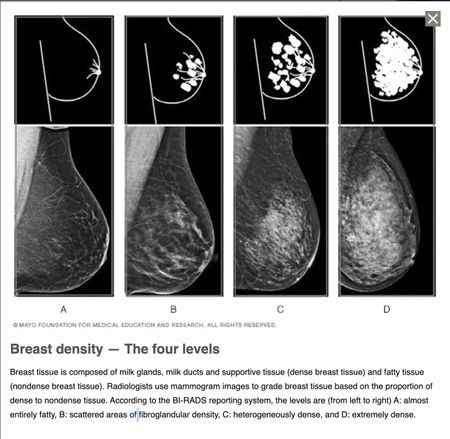
Nine News, this evening, advised that BreastScreen NSW (BSNSW) will be advising clients of their Breast Density from now on and the risk is poses - and this should hopefully result in earlier detection of breast cancer in women who have Dense Breast Tissue. Only Tasmania, Qld and Northern Territory now, do NOT advise of Breast Density in Australia. BCNA's Vicki Durston was also interviewed. (It should be available to view on Nine News shortly.) Dense Breast Tissue is often associated with younger women - but I was in my late 60s, when diagnosed - hardly 'young'! 😉 Dense Breast Tissue shows as 'white' on a Mammogram - as does many BC Tumours. WHITE ON WHITE = INVISIBLE! My own BC (Invasive Lobular Cancer) - and many more members - was missed by the BreastScreen Bus in my NSW home town, just months before my GP detected it when she checked (even tho I'd told her my Screening was clear!) ..... I was called back for 2 more screenings (told there was a problem with the initial screening) before a biopsy was suggested - which showed my Tumours. It is particularly important for those with Invasive Lobular Breast Cancer - as it doesn't show as a 'tumour' as such ..... is it more 'strand like' and is even MORE difficult to identify in a mammogram. This confirms that BC tumours do NOT necessarily show on the mammogram - especially if Rural/Regional/Remote women are relying on BreastScreen Buses ... which do NOT have the latest 3D machines/tomosynthesis on board the buses. 🙁. If YOU live in rural/regional/remote areas .... make sure you advise your daughters/sisters/any female to get checked at a PROPER radiography facility & do NOT just rely on the BreastScreen Buses! From age 40 (not age 50 as BSNSW continues to advertise!) There is NO upper limit either .... so if you are older than 74 - make sure you ring & book, every 2 years! Women with Dense Breast Tissue should be advised to have an Ultrasound and possibly an MRI to identify if there is an issue - with a biopsy to confirm the presence of BC.140ViewsSign in to react to this post1Comment
Election called
Hi everyone - it has been a while since I have posted myself but as always I love the many messages you share with each other that I have a chance to read. Last week Vicki (our Director of Policy, Advocacy and Support Services) and I were in Canberra meeting with both the Minister for Health and Shadow Minister to take them through our policy priorities. I hope you have had a chance to read them: https://www.bcna.org.au/latest-news/bcna-news/bcna-policy-priorities-2025/ These are driven by your experiences and where our Network wants the Australian Government to invest. Keep any eye out on our social media and through the Online Network on updates on commitments the parties may make. Love your work KP111ViewsSign in to react to this post0CommentsChannel 9 News Tonight - how Mammograms are helping identify heart disease!
I’ve just seen an advert for Channel 9 News tonight - showing how Mammograms are helping to identify Heart Disease! Sounds interesting!! It could be worth watching ….. https://baker.edu.au/research/clinical-trials/mammogram-heart82ViewsSign in to react to this post0Comments
Another sister reporting for duty
Hi all I’m Linda, a 54 yo from the Barossa Valley in SA, a wife, mother to 5 humans and 1 furkid, a lover of all things Disney & Robbie Williams and living with a fairly new diagnosis of DCIS. Historically, I’ve had 3 lumpectomies previously between 2003-2015 and been having regular mammograms since. In late January 2024 I had my 2-yearly mammogram, no symptoms although I did tell my husband I had a bad feeling on the day. Four weeks later I got a call from BreastScreen SA asking me to come in for further testing on an area that looked a little abnormal but likely to be benign calcification. The following week I attended my appointment and had further mammograms, an ultrasound and a very uncomfortable core-biopsy. Two days later I attended the results clinic with my husband where we were told the pathology came back malignant and I had Grade 3 DCIS. It was not what I expected to hear. Within 24 hours I’d seen my GP for a referral, seen a private Breast Surgeon and had a date for surgery (hookwire and wide local excision). Surgery was done on 08/03/2024. Side note - I’m a Clinical Nurse and a very empathetic, supportive and caring person who has cared for many patients in my career including providing palliative care to a dying friend so he could die at home in the arms of his wife. I’m also resilient when required but make no mistakes, I am a hot mess right now. I’m a practical person who likes facts, likes organisation and control of my life so this waiting period between surgery and my post-op appointment (scheduled 22/03/2024) with my surgeon to get my pathology results is challenging me, draining me and playing merry hell with my emotions. Although I don’t know what I’m dealing with until I receive the pathology results and I appreciate there are such worse BC diagnoses than mine, so I sincerely hope I’m not offending anyone else, but I can’t help but question my mortality. What is wrong with me? Working in the Theatre sector as a Clinical Nurse gives me the advantage of knowing inside information on which health practitioners are considered top of their industry. So I know I chose a great Breast Surgeon but my over-active mind is wondering why he hasn’t done a CT scan, PET scan or bone scan to check me out thoroughly. I’ve had no blood work done. I lost 25kg in 3 months late last year which was attributed to an IBS diagnosis, but what if it’s related to my cancer? I have no family history due to being adopted. I reached out to the local McGrath Breast Nurse several days before surgery and was told I’d get a house visit my first week home - that was last week and I’ve heard nothing. No follow-up call, nothing. I know it’s only DCIS but I’m screaming out for support and I can’t talk to my friends about this - it’s just repetitive and often a very draining conversation. Sadly, I have a very fractured relationship with my mum so am getting next to no support or acknowledgment from her so it’s just all a bit heavy and dark for me at the moment. What I’d give for an “I love you” from my mum! I’m guessing that come Friday that I may start to feel a little less lost and vulnerable as at least decisions can be considered once the pathology is known. Am I right? All of this is overwhelming as heck to me and I’m not sure what I should be asking at my appointment on Friday. You don’t know what you don’t know!! So any guidance is gratefully received. In closing, I’m sending each and every soul the squeeziest of hugs and best wishes for a positive day. Thanks for reading my blurb! Linda xx :(338ViewsSign in to react to this post8Comments
Breast Cancer Risk in Survivors of Hodgkin's Lymphoma
I discovered this resource from Hodgkin's International titled "Breast Cancer Risks For Hodgkin's Lymphoma Survivors" https://youtu.be/YRp4NLcS4Os?si=QwtFipIn5q4LGrNW At 15:22 on the video, the surgeon discusses The National Comprehensive Cancer Network clinical guideline on breast cancer screening for people who have undergone chest irradiation. This has important guidelines on when to start screening for breast cancer as well as methods of screening for breast cancer. At 17:51 on the video, the surgeon talks about The Childhood Cancer Survivor Study breast cancer risk calculator. Unlike mainstream breast cancer risk calculators, The CCSS risk calculator includes questions on previous radiotherapy treatment. I love that the surgeon provides strategies that survivors can use to advocate for themselves should they receive "push back" from medical providers.87ViewsSign in to react to this post0Comments
The never ending circle
I literally go from ultrasound to mammogram to mri to ultrasound and then biopsies. This is about my 6th time in 2 years which they say is because of dense breasts. This is getting frustrating and the costs are so high. Has anyone else had this experience. At this stage negative but last two years this keeps happening. Back again for another ultrasound this week after mri.413ViewsSign in to react to this post9CommentsOver 350,000 women didn't have mammograms 2021-22 due to pain & discomfort .... NEW technology!
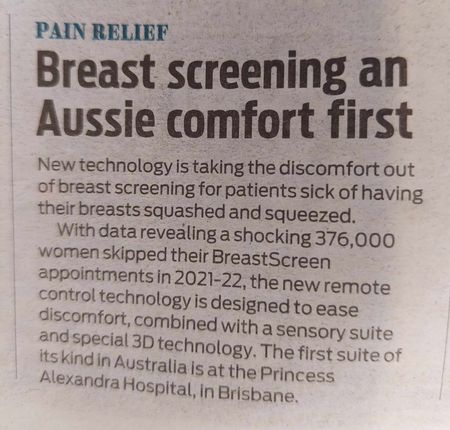
This was in the Newspaper yesterday ...... A HUGE number of women are opting out of mammograms due to pain (even tho not mentioned in the article - it is a very real problem) & discomfort of the current mammogram machines. I had my yearly scans 2 weeks ago & the lady said she wouldn't go 'too hard' on the squeezing ....but I still yelped on one side!! If you live in Brisbane & have access to Princess Alexandra Hospital - book your mammogram there & please let us know how much 'easier' it is?? We've always said that if testicular cancer was diagnosed with the same machine .... this new technology would have been invented decades ago ....351ViewsSign in to react to this post11Comments